
The way forward
Stepping into the fifteenth year of work (2011 to 2026), we pause now in 2026 to review our work, revalue its orientation, and gear up for a future loaded with uncertaintiesStepping into the fifteenth year of work (2011 to 2026), we pause now in 2026 to review our work, revalue its orientation, and gear up for a future loaded with uncertainties. Going beyond projects and goalposts, our gaze must take in the complexities of contemporary trends which require us to ask: what is the rural, how well is the agrarian and where are the cultivators? For a collective that focuses on addressing rural and agrarian issues, these fundamental questions and their responses necessitate that we recognize the de-agrarianisation of rural India to be more substantial than what macro data indicates, that the outing of rural youth into urban spaces means more than the absence of rural labour, and the remaking of the rural into a retirement or returned migrant space means the category of the rural citizen itself needs to be redefined. In such a context, we may have to re-conceptualise and deliver livelihood programs that suit the combination of emerging livelihoods and not just agriculture alone. In addition, much more attention needs to be paid to the holistic well-being of youth and their aspirations that are no longer reflective of rural and agrarian cultures.
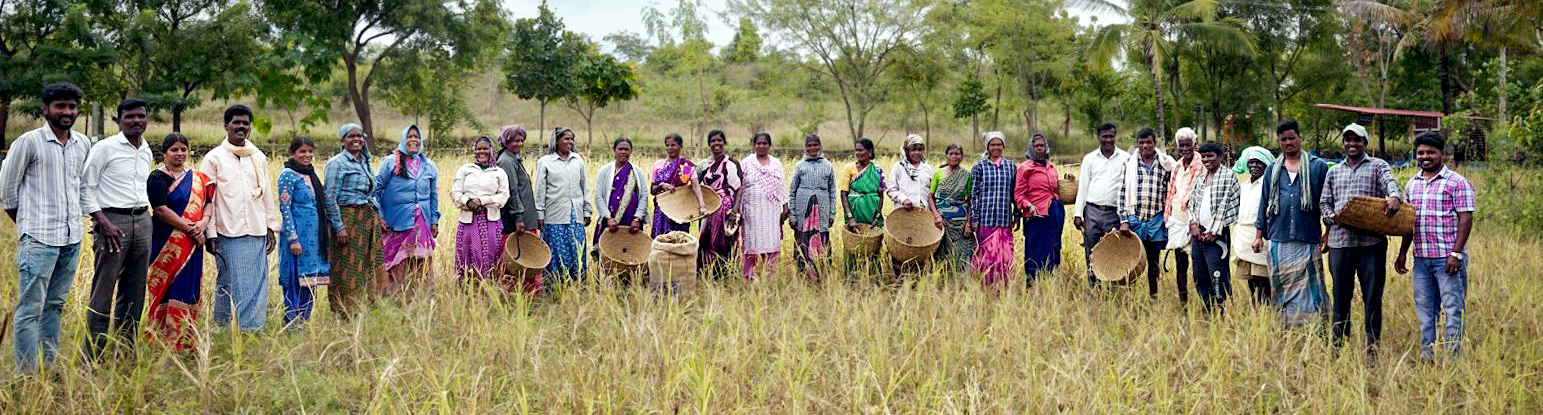
We need to highlight and present deeper and accessible understandings of what the larger ‘system’ –the larger political economy and its attendant socio-cultural worlds – is and the ways in which it has encapsulated and entrapped individuals and groups. This must be part of our out-reach programmes, our courses, and its pedagogies. Aligned with this we require new narratives that challenge established narratives and their legitimizing apparatus of symbols. These narratives must be linked to a stronger articulation of what ‘alternatives’ to the current dominant system can be. If democratic deficits define our current political structures, processes and relationships, then we need to develop and deploy processes and strategies by which a language, culture, and structures of ‘democratic quotients’ can be made possible. In emphasizing the importance of seeking to make possible societies that have inclusiveness, equality and justice as their hallmarks, we also need to ensure that individuals emerge as engaged, empathetic and well-developed citizens. Going beyond only youth, we are now preparing to engage with a larger number of adolescents and women as participants and partners who can emerge as catalysts and leaders in their own contexts and situations. To engage in all this and to grow, we need to reaffirm our commitment to being a collective that is democratic in spirit and work and which embodies the ideas of alternative life-worlds.
At a time of meta-crises the world over, that are imposing arduous conditions on working peoples, it is important for us to not despair and to instead draw on the wise words of Raymond Williams: “to be truly radical is to make hope possible rather than despair convincing”.
As we continue to think, re-think and consider ways in which to address and adapt to our complex contemporary conditions, we have compiled a note on what the ‘alternatives’ can be. Please see attached paper that elaborates both challenges and possibilities.